
PART 4 OF 10: FORBIDDEN SCIENCE I – Judy Wood and the Mystery of the Dust: Where Did the Towers Go?
While the world watched live images of the Twin Towers collapsing on the morning of September 11, 2001, almost no one asked the fundamental question, the one that should have stopped all news broadcasts: where did the matter go?
According to conventional physics and structural engineering, a 415-meter steel and concrete building that collapses should leave a mountain of debris at its base. Steel beams tens of meters long, huge concrete blocks, twisted structures should accumulate to form a hill of rubble several stories high. Instead, at Ground Zero, the debris was surprisingly scarce. Most of the mass of the towers seemed to have simply... disappeared.
Dr. Judy Wood and the Forensic Investigation
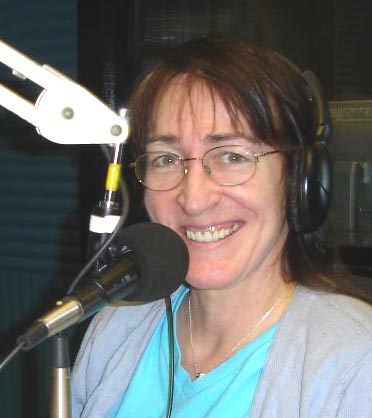
The one who asked this question was Dr. Judy Wood, graduated in mechanical and materials engineering from Clemson University, with a PhD in materials science. For over a decade, Wood analyzed more than 40,000 photographs, hundreds of videos, dust samples, and seismic data related to 9/11. The result of her investigation is collected in the book "Where Did The Towers Go?", a work that shook the foundations of the official version.
Wood's conclusion is shocking: the towers did not collapse to the ground driven by gravity. They disintegrated in mid-air.
The Phenomenon of "Dustification"
Wood coined a specific term to describe what happened: "dustification". According to her analyses, about 80-90% of the upper mass of the towers (the part hit by the planes and the section below down to the impact point) was transformed into a very fine dust before even touching the ground.
This is not simply debris shattered by the impact. The dust of Ground Zero was homogeneous, gray, composed predominantly of microspheres of silicate and iron.
What are Microspheres?
Microspheres are tiny perfect spheres, visible only under a microscope. They form when a material (such as metal or glass) is vaporized instantly at extremely high temperatures and then cools rapidly in the air, condensing into spherical droplets before solidifying. It is the same process that creates volcanic ash or particles in nuclear explosions, but on a scale never seen before in a building demolition.
The massive presence of these microspheres in the dust of Manhattan is chemical proof that the steel and concrete of the towers were subjected to an energy capable of vaporizing them instantly. No kerosene fire (burning at about 800-1000°C) can melt structural steel (which melts at 1500°C), let alone vaporize it and turn it into spherical dust.
The Missing Energy
To pulverize hundreds of thousands of tons of steel and concrete in a few seconds, an immense, concentrated, and instantaneous energy is required. Chemical explosives (such as TNT or thermite) can cut beams or bring down a building, but they cannot make matter disappear. They always leave large, recognizable debris.
Wood concludes that the only explanation compatible with the physical evidence (absence of large debris, presence of microspheres, uniform dust) is the use of Directed Energy Weapons (DEW).
Imagine an invisible energy beam, similar to a high-power laser or a particle ray, capable of hitting the molecular structure of steel, making it explode from the inside into a cloud of dust. This would explain why the towers "melted" into the air instead of collapsing like normal buildings.
But where did this ray come from? How was it possible to hit with such precision even WTC 7, a building that had not been hit by any plane? And who pulled the trigger? These are the questions we will answer tomorrow, analyzing the mysterious flashes and the role of the Woolworth Building.
Sources:
- Judy Wood, "Where Did The Towers Go?": 11 Settembre & Dr. Judy Wood
- Analysis of microspheres and dust: RQI - 11 Settembre and Free Energy
- Judy Wood's Book (Amazon): Amazon - Where Did The Towers Go?
- Video explanation of Dustification: YouTube - Dr. Judy Wood Interview
Drafted with the support of EURIA AI


Nessun commento:
Posta un commento